
Find Kenosha Death Records
Kenosha death records follow the county route, not a separate city-only certificate desk, so the best search starts with Kenosha County. That can be a help, because the county office and the archive resources are both well placed for local research. If the death is recent, the county office is usually the quickest path. If the death is older, the UW-Parkside archives and state historical tools can help you narrow the name, year, or burial line before you order a copy. Kenosha residents get a clear record trail once they treat the city as the clue and the county as the source.
Kenosha Records Overview
Kenosha Death Records Office
Kenosha residents use the Kenosha County Register of Deeds at 1010 56th St., Kenosha, WI 53140. That office is the local service point for certified copies of death certificates and other vital records. Because Kenosha is the county seat, the office sits close to the city search path and keeps the request process simple. If you know the death happened in Kenosha County, the county register is the correct first stop. The city itself points you to the county office, which is the whole point of the page.
The city image source at Kenosha city source gives the page a local city anchor without changing the county-based record path.

That image shows the city context, while the county office still handles the actual certificate.
The county office page at Kenosha County government helps confirm the official county structure and service range. The county register of deeds can also accept orders through its online channel with a credit card, which matters if you are trying to move a request quickly after you locate the right record.
The county register image source at Kenosha County register of deeds ordering page reflects the same local request path.
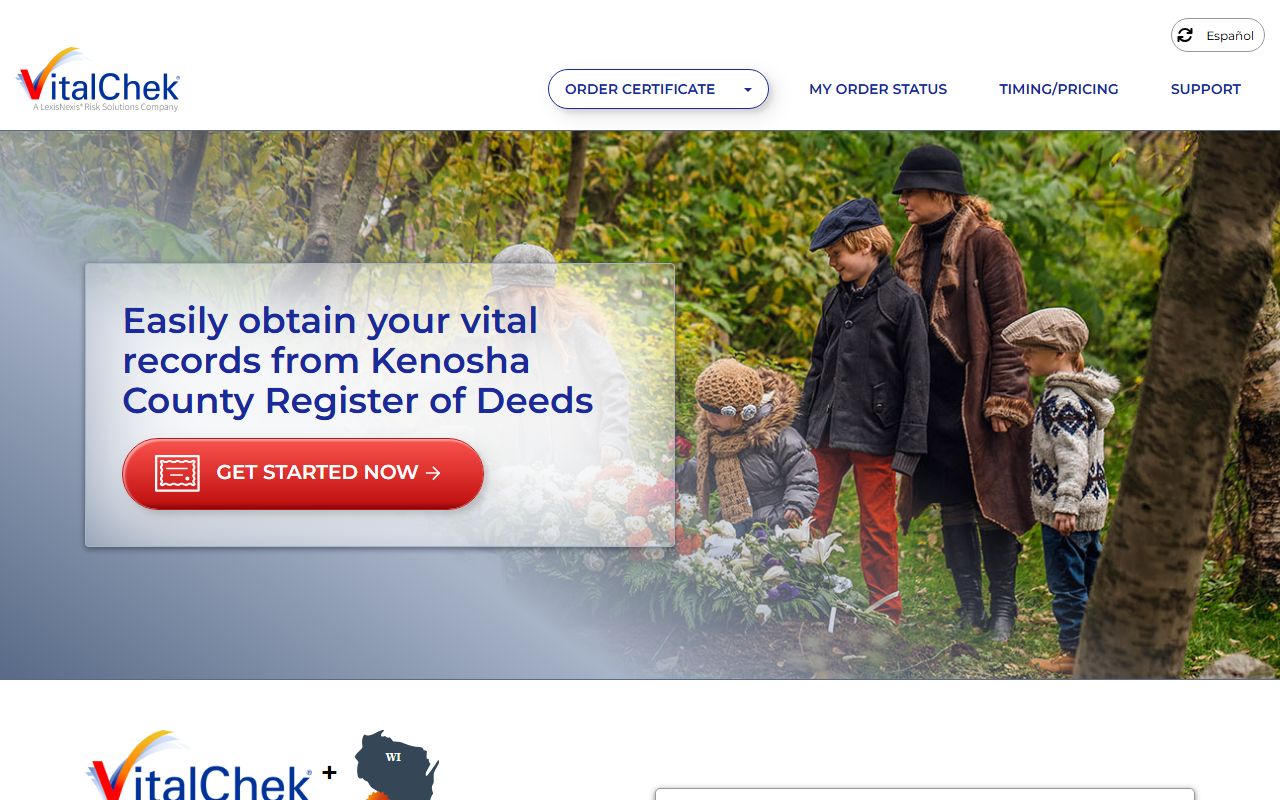
This county image keeps the request tied to the office that issues the record, which is the key point for Kenosha residents.
Kenosha County also keeps the record trail organized through the UW-Parkside Archives. That is important because city searches often start with a name but end with a county certificate or an archive hit. When the city and county work together, the path is much easier to follow.
Note: Kenosha death records start with the county office even when the city name is the first thing you remember.
How To Search Kenosha Death Records
A good Kenosha death records search begins with the name and the date. If the death is recent, the county office or the state office may be enough. If the death is older, the archive route becomes more useful. The UW-Parkside Archives has unofficial vital records for Racine and Kenosha Counties, including church records, hospital records, funeral home records, and cemetery records. Those sources help when the certificate is hard to place or when you only know a family story and not the exact date.
The archives also include the Wisconsin State Death Virtual-fiche Database, 1959 to 1979. That is a useful bridge between modern county records and older family history work. It can help you confirm a name, a year, or a likely burial place before you request a copy. If you are not sure where to begin, that archive trail keeps the search from becoming guesswork.
The Wisconsin Department of Health Services at DHS Vital Records is the statewide fallback. The CDC Wisconsin page at CDC Wisconsin vital records confirms the statewide registration start date and the standard certified-copy fee. That gives Kenosha researchers a clear line for deciding whether a death belongs in a modern county request or an older archive search.
The Wisconsin Historical Society pages at CS88 and CS1581 are the best older-record tools. They help you read a name, a year, and a family clue before you send a request. That matters in Kenosha because the record trail often runs through both office records and archive material. A strong lead can keep you from asking the wrong office first.
- Full name of the person on the record
- Approximate year of death
- Kenosha County or a city clue
- Whether you need a certified copy or a research lead
- Payment and ID details for the request
Wisconsin Statute 69.21 explains who can receive certified copies and how older records may be handled differently. Wisconsin Statute 69.18 explains the death record format, including fact-of-death and extended fact-of-death information. Those rules are why some requests are easy and others need proof of interest. They also explain why a county request, a state request, and an archive search do not always use the same path.
When the date is uncertain, start with the historical society and work forward. When the date is recent, start with the county office and use the state page only if the county route does not fit. That sequence keeps the search efficient and local.
Kenosha Record History
Kenosha has a useful historical trail because the UW-Parkside Archives holds unofficial vital records for the county. Church records, hospital records, funeral home records, and cemetery records all help fill in the gaps around a death. That is useful when a certificate search is not enough on its own. The archive collection can also give you a better date range before you order a copy, which saves time and keeps the request focused.
The Wisconsin State Death Virtual-fiche Database, 1959 to 1979, gives Kenosha researchers another bridge. It can help when you need a time window before modern statewide issuance. If a surname appears in more than one family branch, the archive route can give you the first firm clue. That clue then leads back to the county office if a certified copy is still needed.
The historical society pages still matter. The pre-1907 guide at CS88 helps with older index work, while CS1581 explains what death records may contain. Those clues can connect a death to a spouse, a parent, or a burial place. In Kenosha, that often turns a vague family story into a usable record trail.
The county office at Kenosha County government remains the starting point for certified copies. The archive side is what helps you get the right person before you ask for the copy. Together, they make the county search practical and not just procedural. The city name can start the search, but the county path still finishes it.
For older Kenosha death records, the archive lead and the county copy desk often work best as a pair. One finds the person. The other confirms the record. That combination is what keeps the history search from drifting.
Note: For older Kenosha death records, the archive lead and the county copy desk often work best as a pair.
Copy Details For Kenosha Death Records
Certified copies follow the county payment rules. Kenosha County requires a money order, certified bank check, or cashier's check payable to the Register of Deeds for vital records requests. That keeps the mailing process simple if you are not using the online ordering route. The county office can also help you confirm whether a death is recent enough for a county-issued copy or whether you need to use the state route instead. Online ordering is available through the county office path with a credit card.
The fee pattern is predictable. The Wisconsin Register of Deeds Association at WRDA vital records lists $20 for the first copy and $3 for each additional copy. The CDC Wisconsin page matches the same certified-copy fee. That lets you plan before you place the order. If you need several copies for family files or legal work, the extra cost stays easy to estimate.
The state office at DHS Vital Records is the fallback if the county route does not fit the date. The Wisconsin Historical Society pages at CS88 and CS1581 are useful when you only need a clue instead of a certified copy. That is a different kind of help, but it still supports the same search.
Wisconsin Statute 69.21 explains who can receive certified copies and when access changes. Wisconsin Statute 69.18 explains the death record format, including the fact-of-death and extended fact-of-death fields. Those rules are part of the reason some requests can move quickly while others need a more complete application.
If you only need a historical clue, the archive path may be enough. If you need a certified copy for a legal file, the county office is the better route. The right choice depends on the purpose, the date, and how complete your request is. That is why Kenosha Death Records work best when the office, the record type, and the date all line up.
Note: Kenosha death record requests go smoother when the payment method and record type are settled before you submit the form.
The county government image keeps the page anchored to the official Kenosha County source.

The register-of-deeds image shows the direct request route, even though the archive side is just as important for older records.