
Find Madison Death Records
Madison death records are handled through Dane County, not a separate city office, so the best search path starts with the county Register of Deeds and the nearby state vital records office. That is helpful for people who want a copy fast, want to check an older index, or need to know whether the record sits with the county or with the state. Madison also has strong local history resources, which makes it easier to sort out common names, older dates, and records that may only show up in a pre-1907 index. If you know where to look, the city gives you a clear route from search to copy.
Madison Records Overview
Madison Death Records Office
Madison residents use the Dane County Register of Deeds at 210 Martin Luther King Jr. Blvd in the City-County Building. The office is the central point for Dane County vital records, and the research notes say many records can be viewed free of charge. That is useful when you are still narrowing the name or date. The office also keeps the county's land records, which makes it a busy place, so a call ahead is smart if you plan to sit down and search in person.
The historic research page for Madison explains why planning matters. Public space is reduced, only two computers are available, and staff suggest an appointment instead of a casual walk-in when you need time for older vital records. That advice lines up with how death records often work in the real world. A quick copy request may be simple. A family search that reaches back decades is not. Madison gives you both kinds of access, but the harder search needs more room and more time.
The Madison historical research image comes from a local research page that is built for this kind of work: Historic Madison historical research.

That local research page is a good reminder that city-level death record work in Madison often depends on county files, archived material, and a little patience.
The Wisconsin Department of Health Services at DHS Vital Records is the state fallback image source for Madison death records.
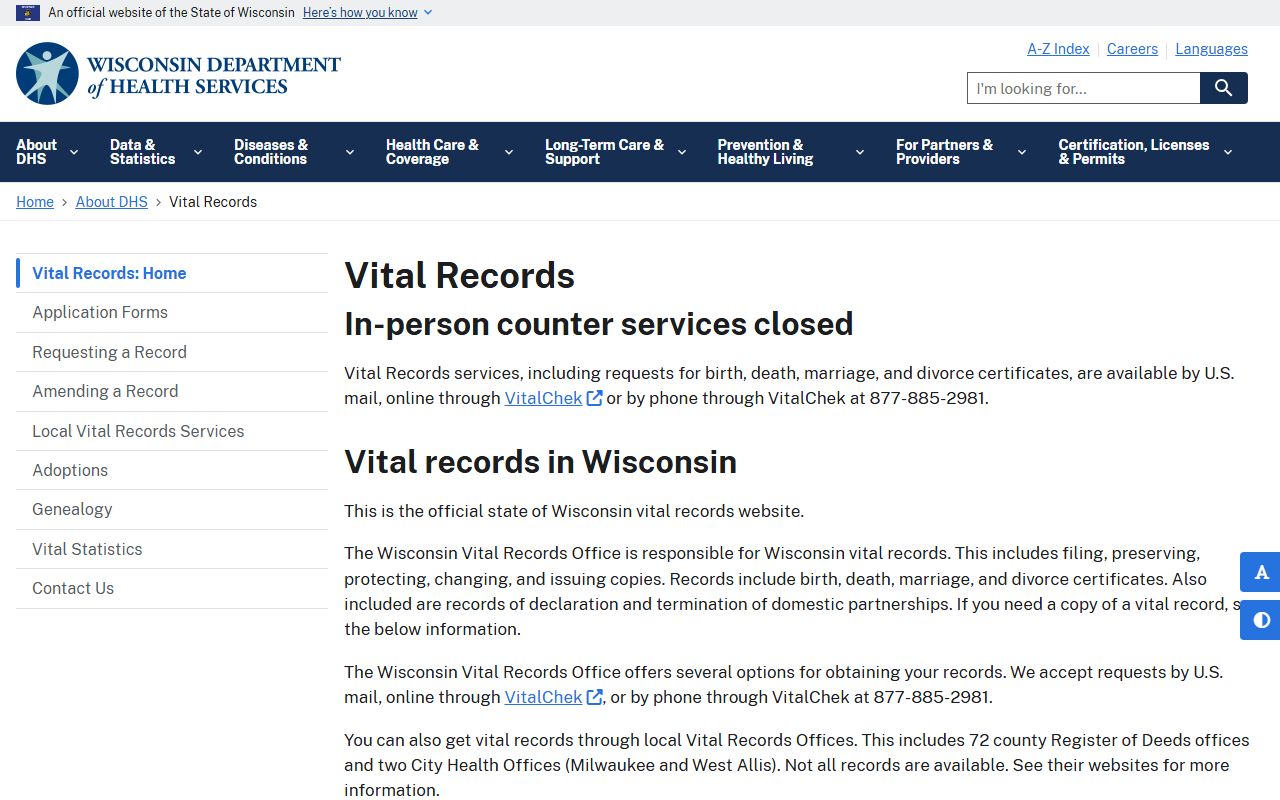
That state image gives the page a second body image for the county and state route.
The same office can help if you need a county-level copy or just want to confirm whether a record is likely to be held in Dane County. For Madison deaths, the city office is not the finish line. It is the doorway into the county system that keeps the record.
Note: Madison searches move faster when you bring the person's full name, an approximate date, and the right county in mind before you visit.
Search Madison Records
Most Madison death records searches begin with the Dane County Register of Deeds office, but the search does not have to stop there. The Wisconsin Historical Society's pre-1907 vital records index is especially useful when a death happened before statewide registration became standard. The Historical Society's death records research tips page also explains what details can appear on a death record and how to use those clues to follow the right family line.
That matters in Madison because older records are not always easy to pin down on the first try. A common surname may show up in several places, and the city's research pages make clear that you may need to call ahead before you get the full office time you want. If you have an approximate year, write it down. If you know the city or burial area, add that too. Every small clue cuts the search time down and reduces the chance of the office pulling the wrong file.
- Start with the Dane County Register of Deeds for modern copies
- Use the Wisconsin Historical Society for older pre-1907 entries
- Check the state office if the county path is not enough
- Bring a photo ID and payment details if you plan to order a copy
- Use an approximate year when the exact date is not known
The state office at dhs.wisconsin.gov/vitalrecords remains the fallback when the record needs to be ordered statewide rather than through the county desk. The CDC Wisconsin page also confirms the $20 certified-copy fee and the fact that statewide registration did not begin until October 1907. That gives Madison researchers a clear cutoff point. Records before that date may be in the state historical index, while newer ones are more likely to be in the county or state vital records system.
Madison Death Records and State Rules
Wisconsin law shapes how Madison death records are released. Wis. Stat. § 69.21 covers certified and uncertified copies of vital records, and that matters when you are deciding whether you need a legal copy or only a search copy. Older records can be easier to trace in the historical index, but a newer record may still require the right kind of request form, ID, and fee before the office can release it. The rule is simple once you learn it: ask for the type of copy that fits the reason you need it.
Wis. Stat. § 69.18 helps explain the record itself. It divides the death record into fact-of-death information, extended fact-of-death information, and other statistical data. That is why some copies give a short proof of death while others show more detail. If you only need to confirm the death for a file or form, the shorter version may work. If you need cause or disposition details, the extended version becomes important when access rules allow it.
Madison researchers also benefit from the nearby state office at 1 West Wilson St. The Wisconsin Department of Health Services says the state vital records office handles mail, online, and phone requests through VitalChek, while the in-person counter is closed. That is a useful fallback if the county office is busy or if you need a statewide search for a record that does not seem to fit the city path. The county, city, and state offices line up well here because Madison sits next to the state office and the main county records desk.
When the paperwork is ready, payment rules matter. The county notes that mailed requests should use a money order, certified bank check, or cashier's check, and personal checks are not accepted. In-person card payments can carry an extra fee. Those rules are plain, but they keep the request moving and prevent back-and-forth delays. For a Madison death record request, that is as important as the name on the form.
Madison Archives and History
Madison has a strong local help network even though the record itself sits with the county. The Historic Madison research page gives practical direction for in-person visits, and the Dane County office page tells you where the records live. That combination is useful for people who are tracing a family death, trying to settle an estate, or checking whether a certificate is held in the county or needs a state fallback. The city is small enough to make the office route clear, but large enough to justify a careful search plan.
The Wisconsin Register of Deeds Association lists the standard $20 first-copy fee and $3 for each additional copy. That lines up with what the state and county pages say and keeps your request estimate grounded in a real fee schedule. If you do not need the actual certified copy yet, start with the county office or the historical index and see whether a view-only search solves the problem first. That can save time and avoid paying for a copy you do not need.
For people who want the widest possible paper trail, Madison gives several paths at once. The county office can pull modern records. The historical society can help with older ones. The state office can step in if the county route is not enough. Each source is different, but all of them point in the same direction: a clean, local way to get the right death record.
Tip: If the Madison record is older than 1907, start with the historical index before you pay for a certified copy request.