
Search Milwaukee Death Records
Milwaukee Death Records can be tracked through city, county, and state offices, and the right path depends on the date of death. If you need a current certified copy, a historic index, or just a quick way to confirm where a record sits, the Milwaukee system gives you several routes. The city Office of Vital Statistics, the Milwaukee County Register of Deeds, and the Milwaukee Public Library each fill a different need. Start with the date you know, then match that date to the office that can move fastest.
Milwaukee Death Records Office
The City of Milwaukee Health Department Office of Vital Statistics is a direct source for city death certificates. Its office at 841 N. Broadway, Room 115, Milwaukee, WI 53202 handles deaths that occurred within Milwaukee before September 2013, and it can also issue Wisconsin death certificates for later dates. That mix matters. A record from a city death, a county death, or a post-2013 state eligible death can follow different paths, so knowing the date saves time and cuts down on back-and-forth.
For a quick first look at the city office, use the official page at Milwaukee Vital Statistics. The city also keeps a related Vital Records page for people who need a broader entry point. Those pages help when you want to learn how the office handles requests before you order. The city office can help with certified copies, and the staff can guide you to the right form if the death happened in Milwaukee.
Milwaukee County also has a strong record path of its own. The Milwaukee County Register of Deeds issues certified copies and keeps in-person counter service at the courthouse. Its public records front door is a good choice when you know the death belonged to the county level or when you need help tracing the paperwork route. The city and county offices overlap in useful ways, but they do not serve the exact same purpose.
Milwaukee County Register of Deeds keeps the public office page open for people who need a current copy or a clear request path, and the official site at county.milwaukee.gov shows the main service menu.
That office is the best place to start when you want a fast county answer. It also helps when the city office points you back to a county file.
The image source for the city desk is the official ordering page at Milwaukee's city vital records ordering page, which matches the front end used for local requests.

That city source is useful for direct requests and for people who need a local office that knows the city file structure well.
Milwaukee city records can also move through a front desk that is built for walk-up use. The office has been described as moving many in-person orders quickly, which helps when you do not want to wait on mail turnaround. The city page at death certificates by mail explains what to send if you cannot visit in person.
Note: For Milwaukee Death Records, the date of death is the first filter. It tells you whether the city office, county office, or state office is the fastest route.
How to Find Milwaukee Death Records
Searches work best when you begin with plain facts. Full name, approximate date, and place of death are often enough to narrow the right office. If you only need to know whether a record exists, the historical index can help before you place an order. If you need a certified copy, go straight to the office that can issue it. That keeps the process simple and reduces error.
The state office is another useful path. The Wisconsin Department of Health Services Vital Records office at dhs.wisconsin.gov accepts requests by mail, online, and by phone through VitalChek. In-person counter service is closed, so that page is best when you want a statewide order path or a fallback option outside the city and county offices. The city and county offices still matter most for local service, but the state page gives you a clean backup.
For a basic search, keep these details handy:
- Full name of the person named on the record
- Approximate date of death
- City or county where the death occurred
- Your contact details for the request
- Photo ID if you plan to order a certified copy
The CDC Wisconsin page is another useful check because it confirms that statewide death registration began in 1907 and notes the $20 certified copy fee used for Wisconsin vital records. That date is a practical line in the sand. Before that, the search is more likely to run through historical sources and county or library collections rather than a clean state file.
The legal side matters too. Under Wis. Stat. 69.21, access and issuance rules depend on the record type and the requester's interest. Under Wis. Stat. 69.18, Wisconsin death records include both fact-of-death and extended fact-of-death data, which helps explain why some copies show more than others.
Milwaukee Death Records by Mail
Mail requests work well when you do not need same-day service. The city mail page at death certificates by mail asks for the date of death, the city and county of death, and a copy of acceptable identification. The fee is set at $20 for the first copy and $3 for each extra copy. That keeps the process predictable, and it is often the best fit for people who are out of town.
Send the request only when your facts are solid. The city office can process certified or uncertified copies, and the request should match the record as closely as you can. If you need a faster route, the city also offers an expedited path through its credit card service page at expedited certificates. That page is helpful when timing matters more than mailing cost.
The mail route is also where the city office keeps the request simple. It does not require a long story. It needs the right facts, your ID copy, and a clear request for the certificate you want. If you want to understand the office before you mail anything, the city office page at death certificates by mail is the official guide.
When you need a same-day or near same-day answer, the city and county front desks are more useful than the postal route. The county register and city health office can both cut the wait if you can appear in person and bring the right ID.
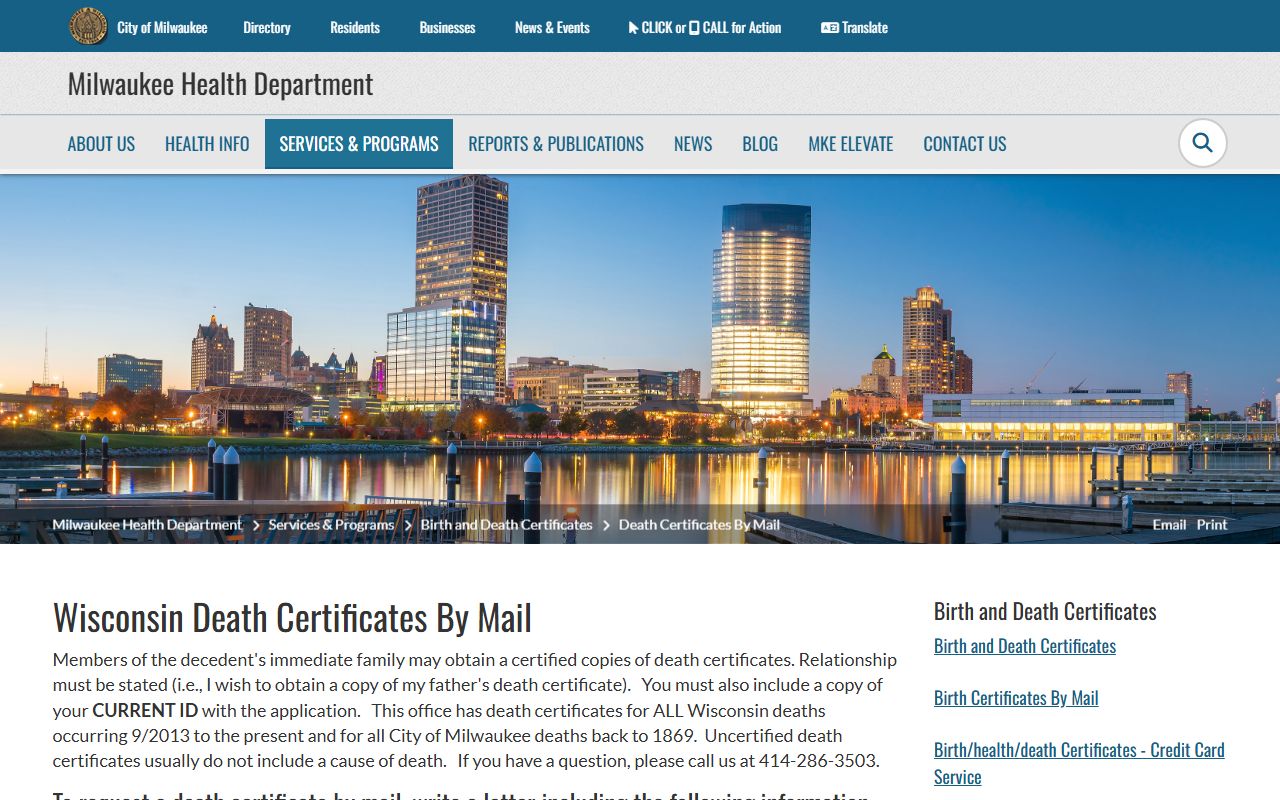
That image reflects the city mail path. It matches the request style that works best when you can wait a bit for processing.
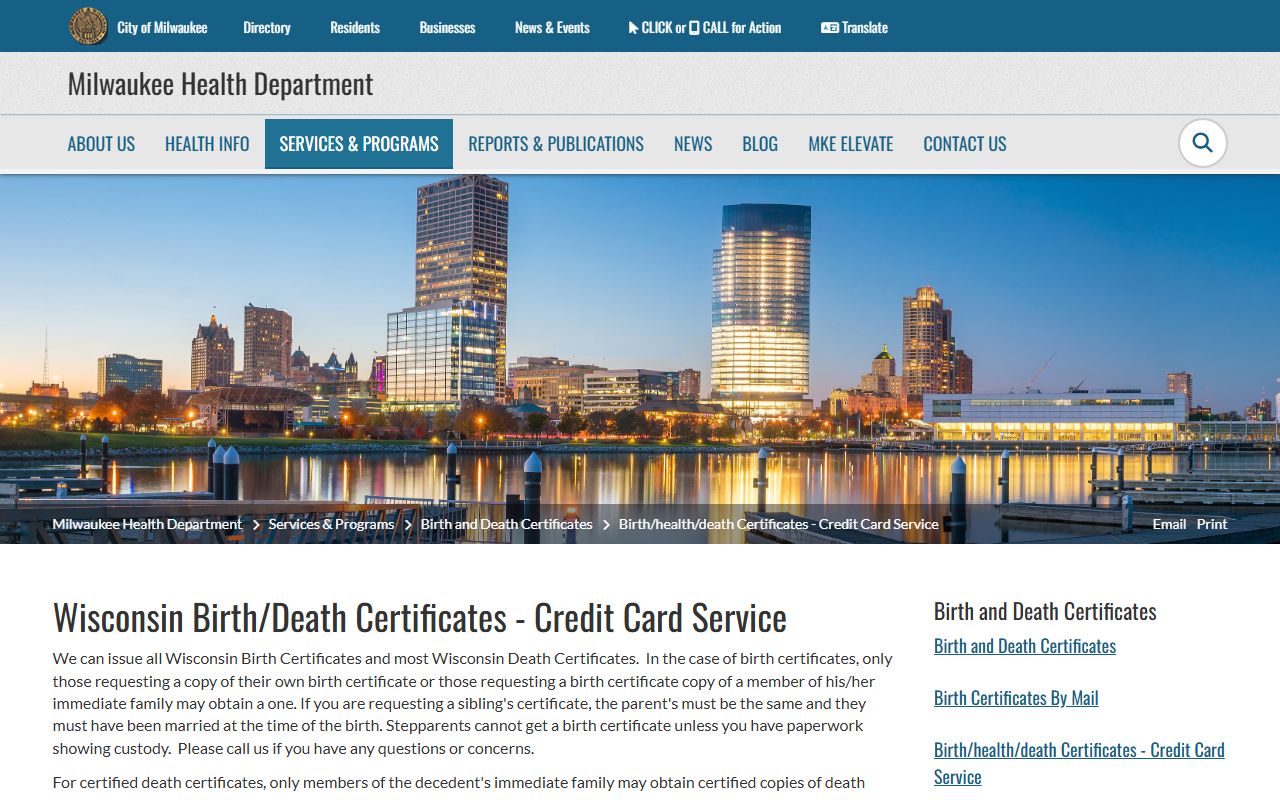
The expedited path is the better fit when you want the city to move faster and you are willing to pay for the speed.
Milwaukee Death Records and History
Historic Milwaukee Death Records often live in more than one place. The Milwaukee Public Library has death records from 1852 to 1912 on microfilm, with indexes that cover 1872-1894, 1895-1907, and 1908-1916. That makes the library a real bridge between old paper files and modern request work. If you are trying to trace a family line or confirm an early death, the library can save hours of guessing.
Start with the library page at Milwaukee Public Library vital records. It points to the local holdings and explains that the library does not own the original certificate in most cases. Instead, it helps you locate the record, then pushes you back toward the right office for the certified copy. That is exactly how a good research trail should work.
The historical side also ties into the Wisconsin Historical Society. The pre-1907 index at Wisconsin Historical Society pre-1907 records and the research notes at Wisconsin Historical Society death records tips help if you are searching before statewide registration. Those resources explain why some older Milwaukee Death Records appear in indexes first and only later point you to a microfilm or archive copy.
Milwaukee County also has a deep local research path. The county genealogy rules PDF at Milwaukee County genealogy rules explains that historical researchers need valid photo ID, pencil notes only, and no cameras or phone imaging at the desk. That kind of rule sounds strict, but it protects the records and keeps the room orderly. The county has also put years of work into indexed and microfilmed holdings, which makes the office worth the trip when a simple online search is not enough.
The library's own vital records page at Milwaukee Public Library vital records describes the holdings that support older Milwaukee Death Records.
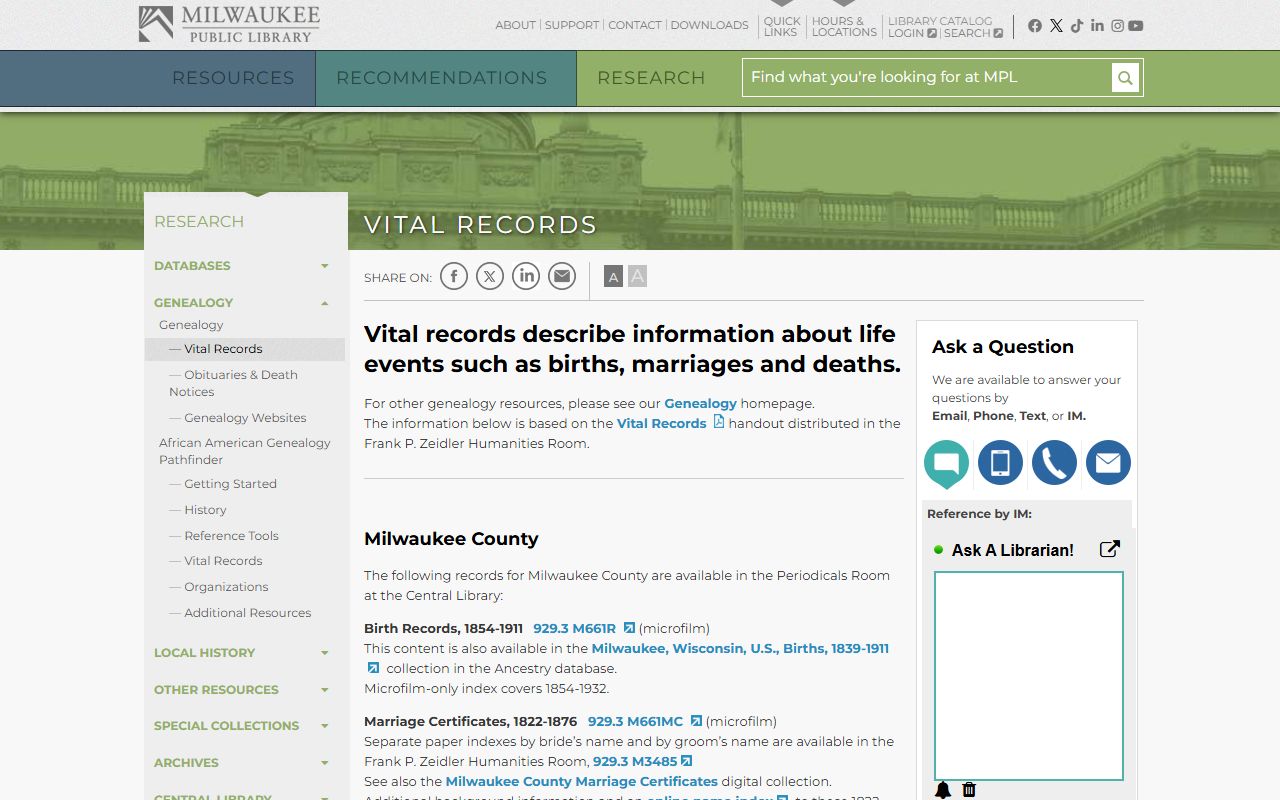
That library collection is a strong match for pre-1907 work and for the years before the modern city and state systems were in place.
For people who want a state-wide path, the WRDA fee summary at Wisconsin Register of Deeds Association confirms the standard first-copy and additional-copy pattern used by county offices. That makes it easier to plan the request before you arrive. The county and city offices may handle the work in different ways, but the basic cost structure stays familiar.
State Backups and Copy Rules
The state rules matter when you need to explain why one office can help and another cannot. Wisconsin law at Wis. Stat. 69.18 splits death data into fact-of-death and extended fact-of-death categories, while Wis. Stat. 69.21 governs who can receive certified copies and when. That is the legal frame behind the office counter.
The CDC and DHS pages line up with that frame. The CDC explains the 1907 start point for statewide registration, and DHS shows the current request paths through mail, online ordering, and VitalChek. If a local office is closed, if you need an older index, or if you are comparing request options, those two pages are the safest statewide backstop. They also help you avoid chasing a record through the wrong office.
Milwaukee Death Records are easiest when the record date, the office, and the request type all line up. If they do not, the local offices still point you toward the right fallback. That is why the city health office, the county register, the library, and the state office all matter in the same search.