
Search Clark County Death Records in Neillsville
Clark County death records are easiest to approach when you start with the county Register of Deeds in Neillsville and keep the state resources ready for older or uncertain cases. The county issues certified copies of birth, death, and marriage certificates, and it also expects genealogy requests in writing, so a clear request matters from the start. If you are tracing a family line rather than ordering a certificate right away, the Wisconsin Historical Society and state vital records tools can help narrow the year before you send anything. That mix makes Clark County a practical place to begin a records search.
Clark County Death Records Overview
Clark County Death Records Office
The Clark County Register of Deeds is the county office that issues certified copies of birth, death, and marriage certificates. The mailing address is PO Box 384, 517 Court Street Room 303, Neillsville, WI 54456-0384. The research note that matters most for Clark County Death Records is the written genealogy requirement. If you are asking for a historical search rather than a ready-made certificate request, the office wants the request in writing, which helps keep the search organized and easier to answer.
The county government page at Clark County government is the official local entry point for the office that handles county death records.
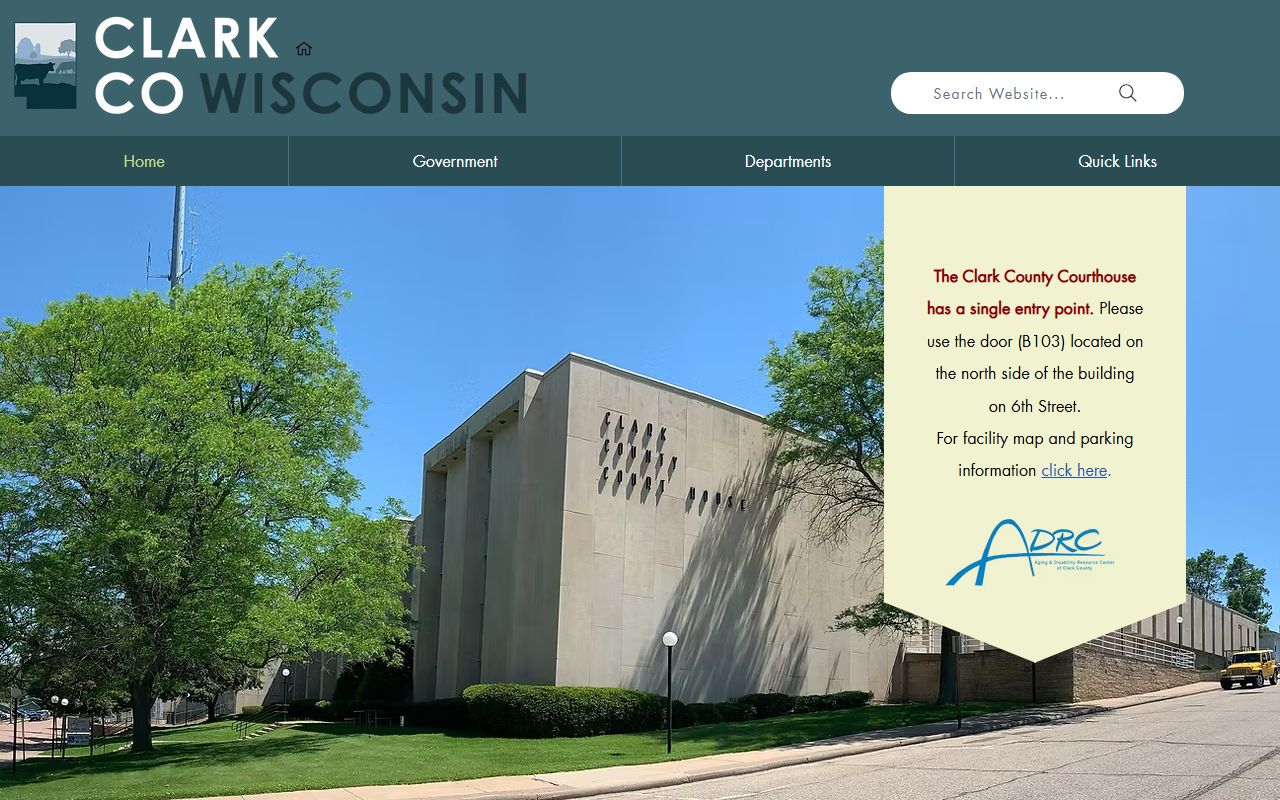
That image keeps the page tied to the county-facing source and makes it easier to recognize the local records desk.
The county register of deeds listing at Clark County register of deeds listing shows the same office from the request side.

That second image helps show the certificate path that follows once you have the right name and date range in hand.
Clark County Death Records work best when the office, the person, and the year are all clear before the request goes out. If the name is common, the written request gives the office a better chance of separating one family line from another. If the death is recent, the county office is usually the first place to look. If the death is older, the county request and the historical index often work together.
Note: For Clark County Death Records, the written genealogy request is not just a formality. It is the part that makes the county search easier to route and easier to answer.
How To Search Clark County Death Records
Searches for Clark County Death Records usually begin with the full name, the approximate year, and the place where the death likely occurred. Once you have those basics, the county office can tell you whether the record belongs in a modern copy request or in a historical search path. The Wisconsin Department of Health Services Vital Records office at DHS Vital Records is the statewide fallback for certified copies, while the CDC Wisconsin page at CDC Wisconsin vital records confirms that statewide registration did not begin until October 1907. That cutoff matters because older Clark County death records may need a historical index first.
The Wisconsin Historical Society pages are the best clues for those older searches. The pre-1907 resource at CS88 helps you locate an ancestor by name and year, and the death records guide at CS1581 explains what details may appear on the record once you find it. Those pages are especially useful when you have a family story, a burial clue, or a rough year but not a complete certificate request. They help turn a guess into a workable search lead.
Before you send a request, gather the details that help the county sort the record correctly:
- Full name of the person named in the record
- Approximate year or date of death
- Neillsville or another Clark County place clue
- Whether you need a certified copy or a genealogy lead
- Whether the request should be returned by mail or another method
The Wisconsin Register of Deeds Association at WRDA vital records gives the standard Wisconsin fee pattern and confirms the usual form-based request process. That makes the Clark County search easier to price and easier to plan. Even when you are not ready to buy a copy, the statewide guidance helps you decide whether the county office or the historical index should come first. Clark County Death Records are simpler when you match the record era to the right source before you file the request.
Clark County Record History
Clark County has the kind of record trail that rewards a careful first pass. The county office gives you the practical request point, but the historical tools give you the context that makes the county file usable. A written genealogy request can identify a family line, a year, or a likely town before the office ever pulls a certificate. That is useful because Clark County Death Records do not always start with a ready-made index hit. If you are working backward from a descendant or a cemetery clue, the historical route often saves more time than a broad copy request.
The Wisconsin Historical Society pre-1907 index at CS88 is the best place to begin when the death happened before statewide registration. It is searchable by name and year, which makes it a good fit for Clark County researchers who know the family name but not the exact day. The companion guide at CS1581 explains what a death record can contain, including family clues and place information. That extra detail matters because the right certificate is not always the first item you find. Sometimes the index entry is the clue that proves you are looking at the right person.
Statewide registration began in 1907, but not every earlier death was recorded in the same way. That is why a historical search in Clark County may move through more than one source. The county office can confirm whether it has what you need. The Wisconsin Historical Society can tell you where to look when the county path is not obvious. The state office can step in when a certified copy is needed and the event falls into the modern registration era. Clark County Death Records fit that layered system well because each source handles a different part of the search.
For family history work, the most useful approach is to treat the county, the state, and the historical index as a single path rather than separate options. A name that appears in a pre-1907 index may lead to a written county request. A county response may point you back to the historical society for a clearer year. That back-and-forth is normal in Clark County and it is often the reason the final record is more accurate than the first clue.
Note: Clark County Death Records are most efficient when the history search narrows the name and year before the county office is asked to produce a copy.
Clark County Death Records Copies
When you need a certified copy, Clark County Register of Deeds is the direct office to contact. Wisconsin law in Section 69.21 explains that requests for certified copies are made in writing and handled with the required fee. That rule fits Clark County well because the local office already expects genealogy inquiries in writing. If you are ordering a death record for legal or family documentation, that combination of written request and local office review is the standard route.
For the record itself, Section 69.18 explains the death record format and the difference between fact-of-death information and extended fact-of-death information. That matters when you need more than a basic verification. A simple certified copy may be enough for one purpose, while a more detailed version may be needed for another. Clark County Death Records follow that same statewide structure, so the kind of copy you request should match the reason you need it.
The Wisconsin Register of Deeds Association at WRDA vital records lists the common fee pattern for Wisconsin vital records requests. The first copy is usually $20 and additional copies ordered at the same time are $3 each. That baseline is helpful if you need several copies for family files, estate work, or other recordkeeping. It also keeps the Clark County request grounded in the same statewide pattern used by other counties.
If the death is old enough that you only need a research lead, the Wisconsin Historical Society may be the better first step because it can provide an uncertified copy and a path back to the county or state office. If the death is recent and the record is eligible for local issuance, the Clark County office can usually stay within the county path. In either case, the goal is the same: use the office that matches the date, the access rules, and the type of copy you need.
Clark County Death Records are straightforward once the request is matched to the right source. The written genealogy rule, the county office in Neillsville, and the state resources all point to the same practical workflow. Start with the strongest clue, then choose the office that fits the record era.