
Search Iron County Death Records in Hurley
Iron County Death Records are easiest to approach when you start with the county Register of Deeds and keep the record type tied to the county event. The research for Iron County is short, but it gives you one important local fact right away. The county Register of Deeds issues certified copies of birth, death, and marriage certificates for county events. That gives the search a clear center even before you decide whether you need a modern certified copy or a historical clue. If you know the name and a rough year, you already have enough to choose the first path with some confidence.
Iron County Death Records Overview
Iron County Death Records Office
The county Register of Deeds is the core Iron County fact to keep in view. The office issues certified copies of birth, death, and marriage certificates for events which occurred within Iron County, Wisconsin. That is enough to set the local lane. The research set does not give a long office profile, so it is better to rely on the role of the office rather than guessing at extra details. If the death happened in Iron County, the Register of Deeds is the office that turns the search into a certificate request.
The State Law Library county forms directory also lists an Iron Register of Deeds birth, marriage, and death application. That does not replace the office itself, but it does show that the county uses an application-based route for vital records work. For a page with a thin research file, that matters because it confirms that the county path is formal and document driven rather than informal or one-off.
The Wisconsin Department of Health Services page at DHS Vital Records is the statewide context behind the first state image below. It is the clean fallback when the county office is not the right fit for the record type or date.
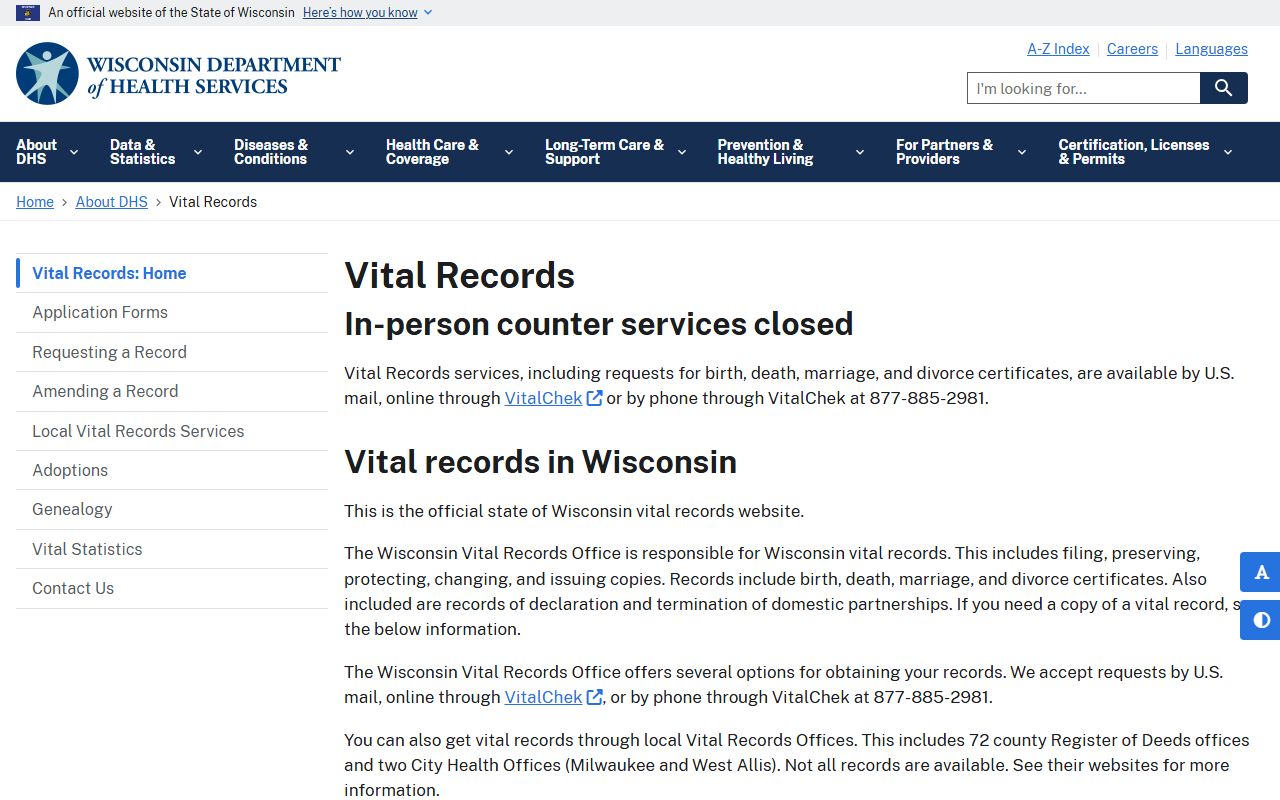
That image keeps the county page connected to the state-level route that supports modern Iron County Death Records requests.
The Wisconsin Historical Society pre-1907 guide at CS88 is the second image source, and it is the better companion when the death is old or the year is approximate.
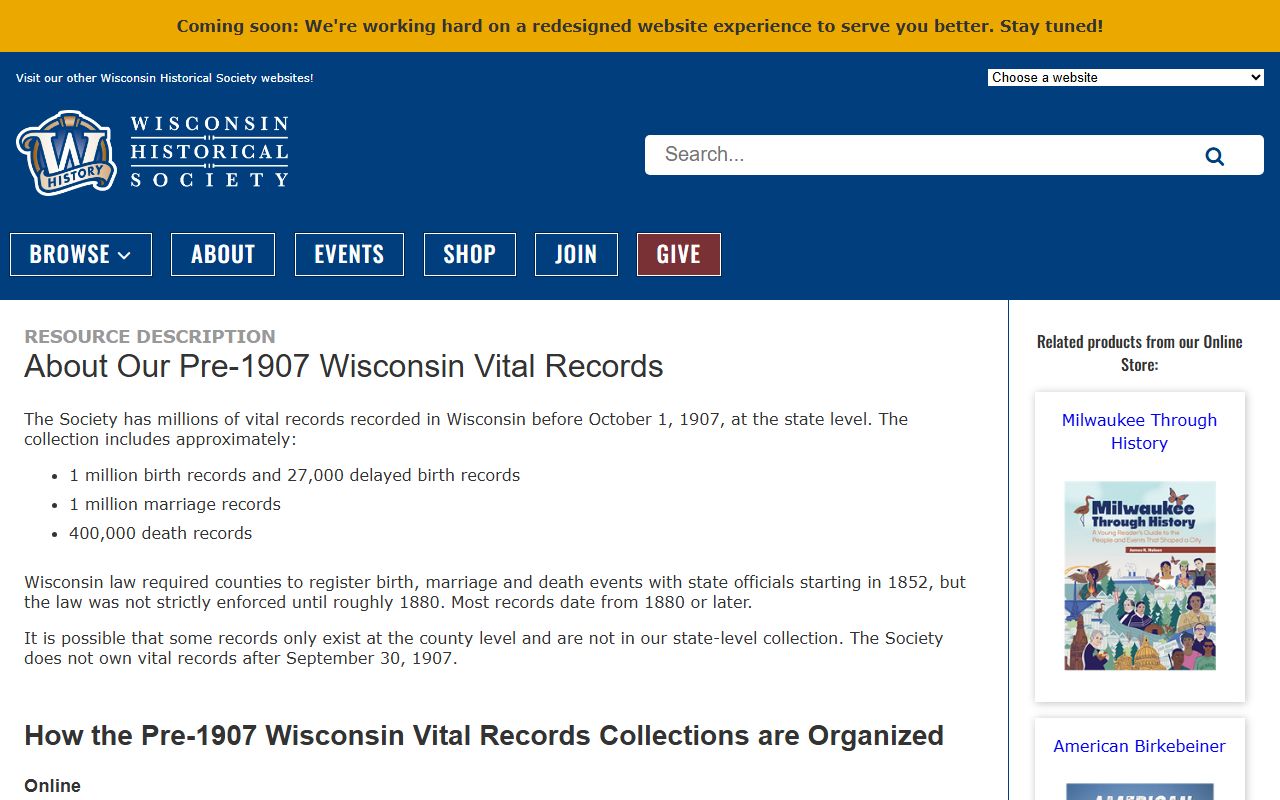
This second image is the right visual anchor for older Iron County Death Records because it points to the historical route before the county copy request begins.
Because the Iron County research file is limited, the page works best when it stays disciplined. The county office is the copy source, the state office is the fallback, and the historical society is the clue source for older records. That keeps the search localized without inventing details that are not documented in the source set.
Note: Iron County Death Records are simplest when the county event, the year, and the request type are clear before you contact the office.
How To Search Iron County Death Records
A good Iron County search starts with the same basics as any careful Wisconsin death record search: full name, approximate year, and county. If the death is recent, the Iron County Register of Deeds should be the first stop because it can issue certified copies for county events. If the death is older, the county office may still be part of the path, but the historical society and the state guide can help you narrow the person before you ask for a copy. That is the best way to avoid a vague request that does not help anyone.
The CDC Wisconsin page at CDC Wisconsin vital records is the right place to look for cost and access guidance, and it confirms the 1907 statewide registration cutoff that shapes all Wisconsin death records research. That cutoff matters in Iron County because older records may not follow the same direct certificate path as modern requests. When the date is close to 1907 or before it, the search often becomes a two-step process instead of a single form submission.
The Wisconsin Historical Society resources at CS88 and CS1581 are the strongest support tools for the historical side of Iron County Death Records. CS88 is useful when you need to find the person first. CS1581 helps once you want to understand the record fields or make sense of a death entry. If the family story only gives you a surname, those two pages can turn a guess into a targeted county request.
Because the county source is so concise, you should think of Iron County Death Records as an office-led search with a historical backstop. The county office can issue the copy, but the historical tools help you know whether that copy should be requested now or after a bit more research. That is especially helpful if the death is not clearly inside the modern registration era.
The Wisconsin Department of Health Services page at DHS Vital Records gives the statewide fallback when the county route does not fit. It is also the best reminder that Wisconsin has both local and state paths, and that the right one depends on the date and the copy type. Iron County Death Records fit that pattern neatly even when the local research file is shorter than you might expect.
When you get stuck, do not widen the request too quickly. Keep the name, year, and county tight, use the state page for the modern path, and use the historical society for older clues. That keeps the Iron County search practical instead of speculative.
Iron County Death Records History
The history side of Iron County Death Records is mostly about how a short county record note fits into the larger Wisconsin system. The county office gives you the copy source, but the historical society pages give you the search context. That matters because older Wisconsin death records were not registered the same way as later records. A county-level file may exist, yet the fastest way to reach it may still be a pre-1907 index or a family clue from another source.
Iron County is a good example of why the historical route is still important even when the office role is clear. If you only know the surname, you may need to test the year range first. If you know a burial place but not the exact death date, the historical society can help you line up the death with the likely record year. Once that is done, the county Register of Deeds becomes the office that can actually issue the copy.
The Wisconsin Historical Society guide at CS88 is the best place to start when the record is old. The companion guide at CS1581 is more useful once you need to interpret the death record fields or compare one entry to another. Those two pages are a strong historical pair for Iron County Death Records because they reduce the number of guesses you need to make before you contact the county.
The 1907 statewide registration cutoff from CDC Wisconsin vital records still shapes the page. Before that date, county record keeping was uneven, which is why historical tools matter so much. After that date, the county copy route becomes more reliable. Iron County sits in the middle of that pattern just like the rest of Wisconsin, so the historical and county paths should be treated as partners rather than competitors.
The limited Iron County research file also suggests a practical point. Do not overbuild the request. Use the county office for the copy, the historical society for the clue, and the state office for the fallback. That is enough structure to keep Iron County Death Records usable even when the source material is sparse.
Note: Iron County Death Records history is easiest to manage when the year is narrowed before a certified copy request is filed.
Get Iron County Death Records Copies
When you need a certified copy, the Iron County Register of Deeds is the direct route. The county office issues certified copies of birth, death, and marriage certificates for county events, so the copy path is local even if the research starts somewhere else. That is the part of the workflow you want to keep clear. A death that happened in Iron County should stay tied to the Iron County office unless the date or access rule pushes you toward the state route instead.
The county forms directory in the Wisconsin State Law Library resource reinforces that point because it lists an Iron Register of Deeds birth, marriage, and death application. In practice, that means a complete written request matters. It also means the office expects the application to do some of the work that a family-history note would otherwise try to do. The better the request, the less time the office spends trying to interpret it.
The statewide fee and restriction baseline comes from the CDC Wisconsin page at CDC Wisconsin vital records. That is the best place to look when you need to understand what the record can cost and what the access limits are. The Wisconsin Register of Deeds Association page at WRDA vital records can also help you compare the usual Wisconsin copy structure if you are trying to budget for more than one certificate. Those state references keep the Iron County request from becoming a guess.
Wisconsin Statute 69.21 explains the written request rule and the direct and tangible interest standard for later records. Wisconsin Statute 69.18 explains how death records are formatted and why some requests produce a shorter copy while others can include more detail. Those rules matter in Iron County because the copy you ask for should fit the reason you need it, not just the easiest option on the form.
The state office at DHS Vital Records remains the fallback when the county route is not appropriate. That makes the overall Iron County Death Records path straightforward: county office for the certified copy, state office for the broader fallback, and historical society for the older clue. If you keep those roles separate, the request is much easier to manage.
Note: Iron County Death Records copies go smoother when the application is complete and the year is narrowed before submission.