
Search Marathon County Death Records
Marathon County death records are easiest to handle when you start with the county Register of Deeds and keep the county seat in view. The county issues certified copies of vital records, and the city of Wausau serves as the county seat, which keeps the record path local and direct. Recent requests usually move through the county office. Older files may need the state office or a historical index first. Because the county research set is thin, the safest approach is to use the county office, the Wisconsin Historical Society, and the state vital records office together rather than trying to force one office to do all the work.
Marathon County Death Records Overview
Marathon County Death Records Office
The Marathon County Register of Deeds issues certified copies of Marathon County birth, death, and marriage certificates. That gives the county a direct role in the record trail, even though the county research set is thin. If the death happened in Marathon County and the record is recent, the county office is the first stop. If the record is older, the state office and the historical society become more useful before you order a copy. The county office is still the main point of contact, so the search should begin there.
The county image source is the county ordering listing at Marathon County death certificate listing.
That image keeps the page tied to the county record route, which is the office that issues the copy even when the rest of the research is sparse.
The Wisconsin Department of Health Services page at DHS Vital Records is the statewide fallback image source for Marathon County Death Records.
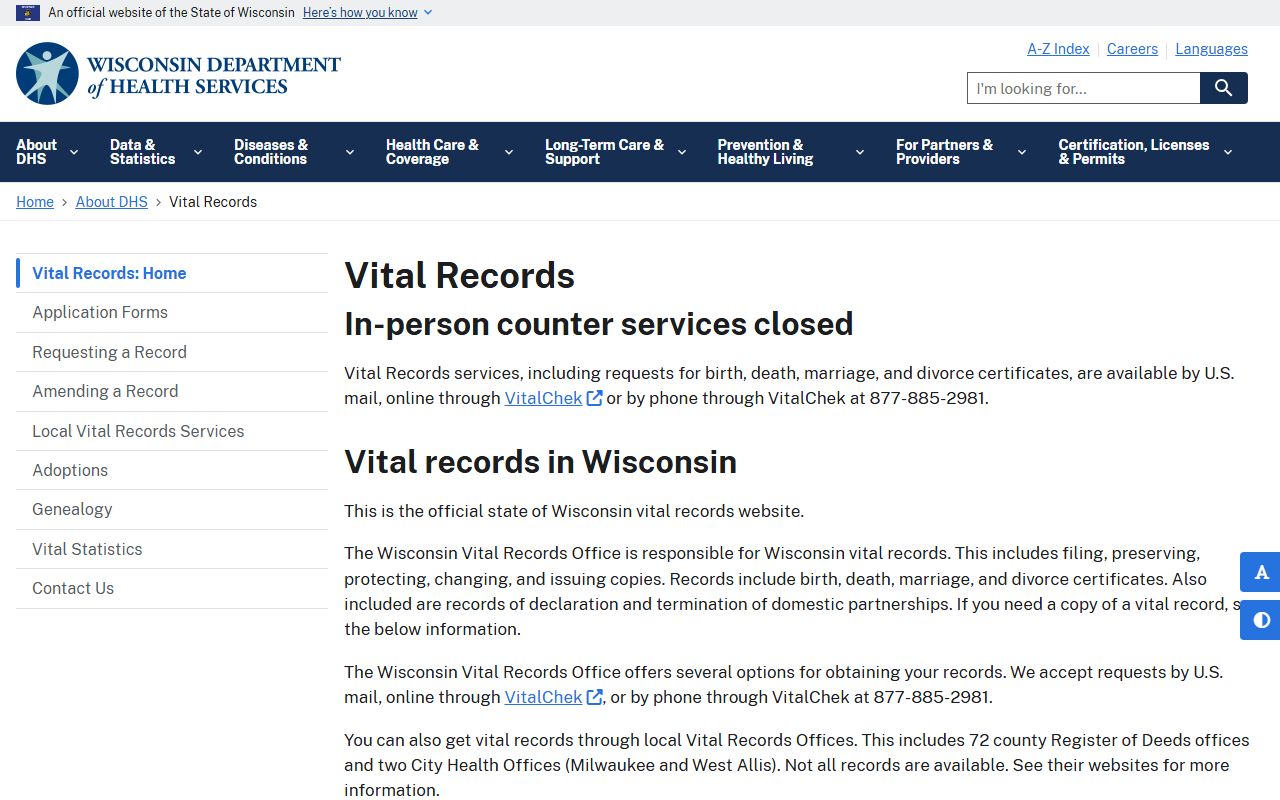
That image gives the page a broader Wisconsin anchor when the county details are thin.
When county details are thin, the state resources matter more. The Wisconsin Department of Health Services office at DHS Vital Records gives you the statewide request path. It accepts mail, online, and phone requests through VitalChek, while in-person counter service is closed. That makes the state office a practical fallback when the county path is not enough or when you need a broader issuance route.
The Wisconsin Register of Deeds Association also gives you the normal fee baseline. It lists $20 for the first certified copy and $3 for each additional copy ordered at the same time. That is the standard Wisconsin pattern, and it is the easiest way to estimate the request before you mail it or file it online.
Note: When county details are thin, the county office, the state office, and the historical index usually work better together than one at a time.
Search Marathon County Death Records
Searches work best when you keep them simple. Start with the full name, a likely year, and the county. If you know the city or township, add that too. Older Marathon County death records may be easier to place with the Wisconsin Historical Society's pre-1907 records guide and the death records research tips page. Those pages help when the exact date is fuzzy or when the surname has more than one spelling. They are especially useful because Wisconsin statewide death registration did not become standard until 1907.
The Wisconsin Historical Society pre-1907 vital records guide is the best place to start for older county records. The companion page at Wisconsin Historical Society death records research tips explains what a death record may show and how to use the index fields. That matters when a county request is too vague or when a historical record turns up before a modern certificate does. For older Marathon County Death Records, the historical route is often the right first step.
The CDC Wisconsin guide at CDC Where to Write for Wisconsin vital records confirms the same 1907 cutoff and the standard certified-copy fee. That gives you a second source for the same basic rule. If the record is before 1907, the historical trail is usually stronger. If it is later, the county office or the state office can usually handle the request more directly.
When you are ready to order, keep the request tight. The more specific you are, the less likely it is that the office will pull the wrong record or ask you to start over. A Marathon County death search is not hard, but it does reward clean details and a clear date range.
The county fee pattern is also easy to plan around. The Wisconsin Register of Deeds Association lists the standard copy prices and helps you compare county and state costs before you submit a request. That is useful if you need more than one copy or if you are deciding whether to request the record locally or through the state office.
Marathon County Death Records History
Historical work is where Marathon County benefits most from state-level guidance. The county research set is thin, so the Wisconsin Historical Society and the state office matter more than usual. The historical society pages help you understand how older death records were indexed, while the state office explains how to request modern copies when the event falls within the statewide system. That combination keeps the search local without inventing details that are not in the research.
Older death records can reveal useful family clues. Even a short record may help with names, burial details, or a likely date. If you are tracing a family line, that kind of clue is enough to move from a name on paper to a usable certificate request. Marathon County researchers often need that bridge because the county page itself is brief and the state sources are where the practical guidance lives.
Wausau is the county seat, so the county office stays close to the search path. That matters because a county-seat city gives you one clear local center instead of several competing offices. The county office still issues the copy, but the city name helps you keep the search pinned to the right place.
The Wisconsin Historical Society death guide at CS1581 gives a plain explanation of what can appear on a death record and how to search by surname. The pre-1907 resource at CS88 is just as important for older cases, because it explains how the index can point you toward the right film or collection before you order a copy. For Marathon County Death Records, those two pages do more work than a generic county summary would.
Wausau is the county seat, so the county office and the state guides both point back to the same local center. That makes the record trail easier to manage than it might be in a county with several competing local offices. The key is still the same. Use the state and archive sources to get the right lead, then use the county office to request the copy.
Note: Pre-1907 research is usually where the extra time goes, not the county copy request itself.
Get Marathon County Death Records
When you need an actual copy, use the county office if the record is in the county's modern issuance range. The fee structure is the standard Wisconsin pattern. The first certified copy is usually $20, and additional copies are $3 when ordered at the same time. That fee pattern comes from the Wisconsin Register of Deeds Association and matches the statewide guidance from the Wisconsin Department of Health Services. It is a practical number to know before you visit or mail a form.
Wisconsin Statute 69.21 explains who can receive certified copies and how older records may be issued as uncertified copies. Wisconsin Statute 69.18 explains the structure of the death record itself, including the fact-of-death and extended fact-of-death split. That matters when a requester needs more than proof that a death happened. It also matters when the office has to decide which version of the record can be released.
The state office at Wisconsin DHS Vital Records is the other route to keep in mind. It is a good fallback when the county path is not enough or when you need a statewide request path instead of a local one. The CDC guide confirms the same 1907 cutoff and fee structure, so the basic rules do not shift as you move between county and state sources.
If you are ordering for legal use, ask for the certified version first. If you are tracing family history, an older index entry or an uncertified historical copy may be enough to point you toward the right person. Either way, the county office remains the place where the request becomes an actual record.
Note: Marathon County death records requests are easiest when you already know whether you need a legal copy or a historical lead.